Why You Feel Guilty When You Finally Slow Down
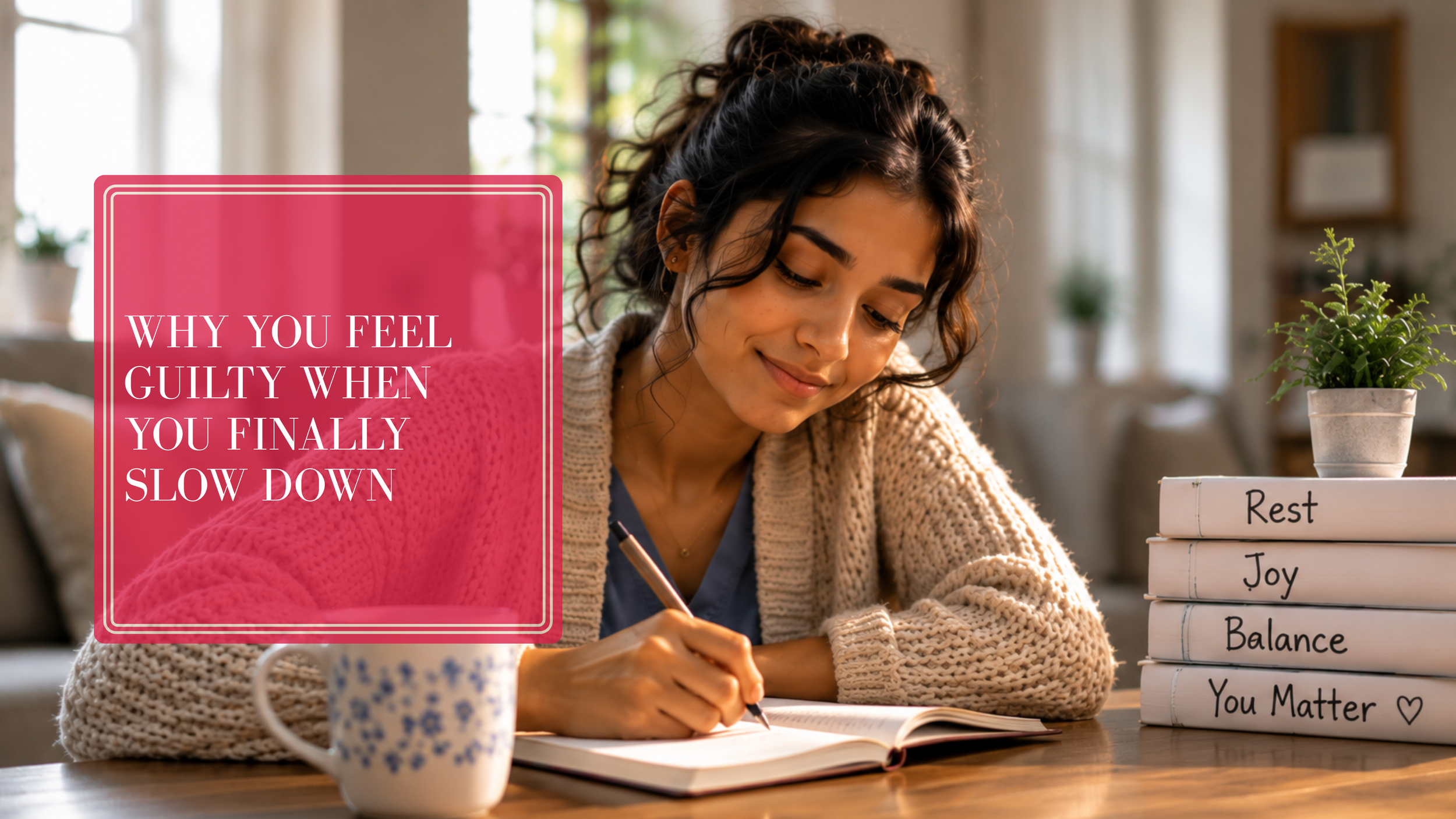
If you've ever sat down to rest only to feel anxious, restless, or guilty, you're not lazy. Your nervous system has simply been trained to believe that your worth is tied to your productivity.
For years, I believed rest was something I had to earn.
If I finished my charts.
If I answered every email.
If I crossed enough things off my to-do list.
Then I could finally relax.
Except that moment never came.
There was always one more patient to call.
One more task to complete.
One more responsibility waiting for me tomorrow.
Even when I had time to rest, I didn't know how.
Instead of feeling peaceful, I felt uncomfortable.
Maybe you've experienced that too.
You finally sit down after a long day, and within minutes you're thinking about everything you should be doing instead.
You pick up your phone.
Start another load of laundry.
Answer one more email.
Not because anyone asked you to.
Because slowing down somehow feels wrong.

Your Brain Learned That Busy Equals Safe
Women in healthcare spend years training their brains to stay alert.
We anticipate problems before they happen.
We respond quickly.
We solve complex situations under pressure.
Those skills make us excellent clinicians.
But eventually, our brains stop recognizing the difference between a true emergency and everyday life.
Constant busyness becomes familiar.
Stillness becomes unfamiliar.
When that happens, your nervous system starts interpreting rest as something uncomfortable instead of restorative.
It's not because you're doing anything wrong.
It's because your body has adapted to the environment you've spent years living in.

Productivity Became Part of Your Identity
Many high-achieving women don't just work hard.
They begin measuring their value by how much they accomplish.
A productive day feels like a successful day.
A slower day can feel like failure.
Without realizing it, your identity becomes tied to checking boxes instead of checking in with yourself.
That mindset doesn't stay at work.
It follows you home.
You begin believing that resting is wasting time.
That taking a break means you're falling behind.
That everyone else deserves your energy before you do.
Over time, exhaustion starts feeling normal.
Rest Is Part of the Work
One of the biggest mindset shifts I had to make was realizing that rest isn't separate from high performance.
It's what makes high performance sustainable.
Professional athletes don't become stronger during training alone.
Their bodies rebuild during recovery.
The same is true for us.
Your brain processes information during rest.
Your nervous system regulates during rest.
Your body repairs itself during rest.
Without recovery, performance eventually declines.
Not because you've become less capable.
Because you've been asking your body to give more than it's had the opportunity to restore.
Start Small
You don't have to disappear for a week to begin calming your nervous system.
In fact, the most meaningful changes usually happen in small moments.
Take three slow breaths before you start your car after work.
Eat one meal without looking at your phone.
Spend five minutes outside before walking into your house.
Pause before saying yes to another commitment.
These moments may seem insignificant.
But every time you choose to slow down, you're teaching your nervous system that it doesn't have to stay in survival mode.
Healing happens through repetition.
Not perfection.

You Don't Have to Earn Peace
One of my clients told me something I'll never forget.
"I realized I was waiting for permission to rest, but no one was ever going to give it to me except myself."
That realization changed everything.
She stopped waiting for the perfect schedule.
The perfect vacation.
The perfect time.
Instead, she started creating small moments of peace in the middle of ordinary days.
And that's where real transformation began.
Because peace isn't something you find after life gets easier.
It's something you practice while life is still happening.
If you've been feeling guilty every time you slow down, I want you to remember this:
Your worth has never been determined by your productivity.
You don't have to earn your rest.
You don't have to justify taking care of yourself.
And you certainly don't have to wait until you're completely burned out before giving yourself permission to pause.
Your nervous system and the people you love will thank you for it.
If you're ready to stop living in constant survival mode and begin creating a calmer, more sustainable life, download my Negativity Time Out Toolkit.